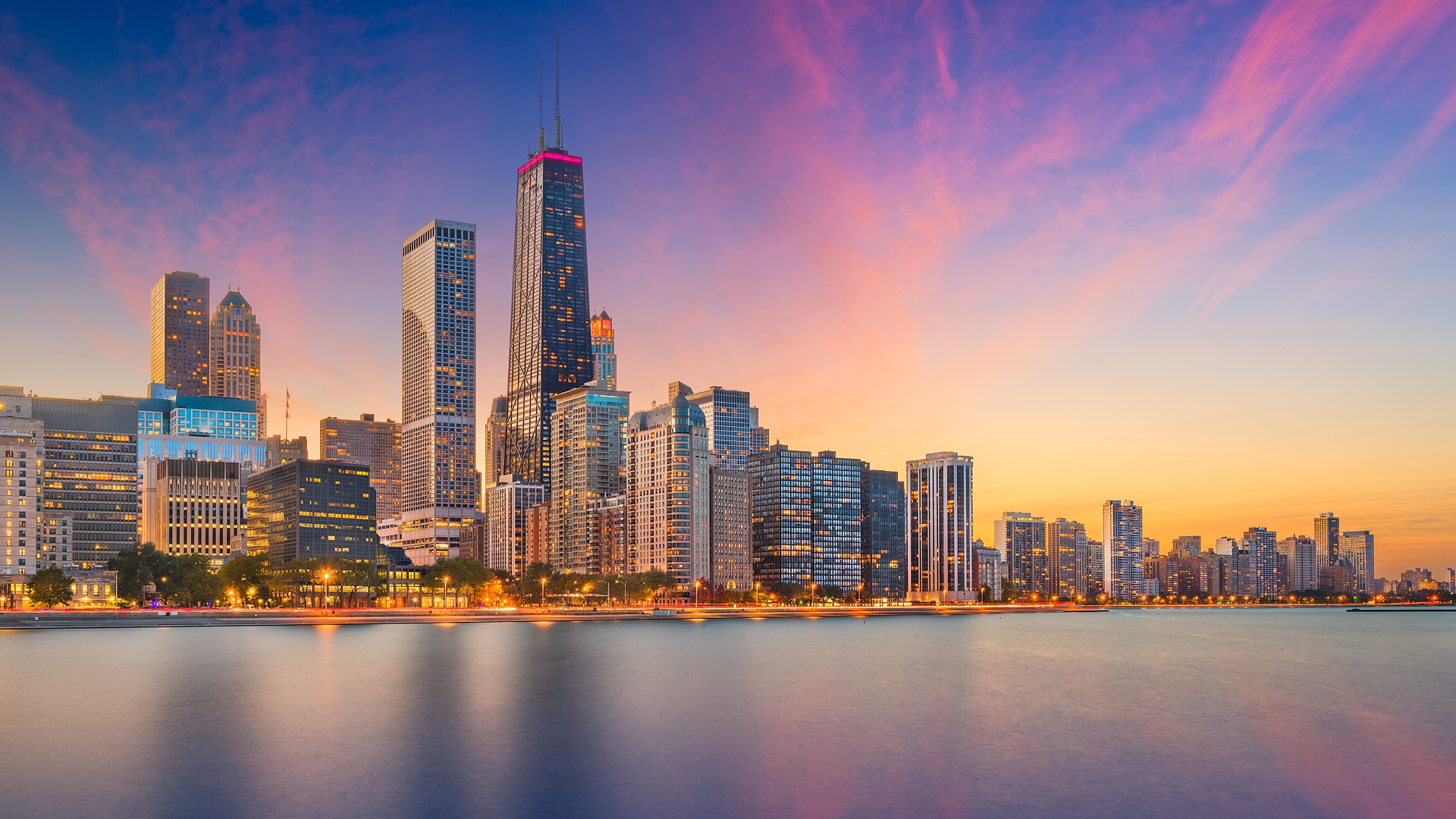
The San Francisco to Chicago relocation has accelerated meaningfully since 2020, driven by a combination of remote work flexibility, Bay Area rent that has priced out even senior engineers, and a growing recognition that Chicago's professional infrastructure — particularly in tech and finance — has closed the gap with coastal cities faster than most people outside Chicago realize.
SF transplants typically arrive expecting a significant lifestyle downgrade and find the opposite. What they find is a city that operates at a comparable professional and cultural level at roughly half the cost, without California's income tax, without the requirement to own a car, and with a lakefront that's free and public and genuinely world-class.
Start your search from San Francisco — Virtual tours available
What Your Budget Actually Buys
The rent gap between San Francisco and Chicago is among the widest of any two major American cities at equivalent quality tiers.
A budget that covers a one-bedroom in a mid-tier SoMa, Mission, or Pacific Heights building — small unit, aging fixtures, steep deposit — gets you a two-bedroom in a brand-new high-rise in River North, West Loop, or Fulton Market. With a rooftop pool, a gym, in-unit laundry, concierge service, and a doorman. At a lower total monthly cost. Without California's income tax. Without needing a car. Without paying a broker fee.
| Unit Type | San Francisco (2026) | Chicago Downtown (2026) |
|---|---|---|
| Studio | $2,600 – $3,600 | $1,700 – $2,600 |
| 1 Bedroom | $3,400 – $5,200 | $2,200 – $3,800 |
| 2 Bedroom | $5,000 – $8,500+ | $3,200 – $5,500 |
The California Tax Advantage
California's state income tax reaches 13.3% at the top bracket — one of the highest state-level rates in the country. Illinois has a flat 4.95% with no city income tax.
For a software engineer or tech professional earning $180,000, the annual tax difference between living in San Francisco and living in Chicago exceeds $14,000. At $250,000, it exceeds $20,000. For senior engineers, principal engineers, or tech managers at that income level, the tax gap alone — before rent savings are factored in — represents a material financial restructuring. Spread over five years, the cumulative difference compounds into the kind of number that changes what's financially possible.
The Tech Professional Calculus
The objection SF tech workers raise most often about Chicago is the tech ecosystem. It's a legitimate concern that deserves a direct answer rather than deflection.
Chicago is not San Francisco. There is no Chicago equivalent to the density of venture-backed startups, seed-stage companies, and IPO-track growth-stage companies that define the Bay Area ecosystem. If you are in the early stages of a startup career and the network effects of being physically present in SF are central to your professional trajectory, that matters and shouldn't be dismissed.
What Chicago does have: Google's Midwest headquarters anchoring a substantial tech presence in Fulton Market at 320 N Morgan Street. A growing fintech and enterprise tech sector. A strong consulting and finance professional community for those who have transitioned or are considering it. A cost structure that allows tech professionals on remote salaries to build wealth in ways that SF salaries consumed by SF rent structurally prevent. Remote workers earning a Bay Area salary and living in Chicago are among the highest-leverage residents in any major American city.
Chicago Neighborhood Equivalents to San Francisco
San Francisco neighborhoods tend to map more cleanly to Chicago than LA neighborhoods do, because both SF and Chicago are vertically oriented cities where neighborhood identity is about walkability and proximity rather than driving time.
| If You're Coming From | Consider in Chicago |
|---|---|
| SoMa / Mission Bay | West Loop, Fulton Market |
| Pacific Heights / Nob Hill | Gold Coast, Streeterville |
| Financial District / Embarcadero | River North, Lakeshore East, The Loop |
| Hayes Valley / Lower Haight | River North |
| The Mission / Potrero Hill | South Loop, Printer's Row |
Note: Hayes Valley and The Mission have closer character matches in Chicago's Wicker Park and Logan Square — but those neighborhoods fall outside Dibze's downtown market. The table above covers the closest downtown equivalents.
Not sure which neighborhood fits your profile yet? The best Chicago neighborhoods by lifestyle and profession routes every major renter type to the right starting point. Still deciding between West Loop and Fulton Market, or between Gold Coast and Streeterville? The Chicago neighborhood comparison guide runs every head-to-head that SF transplants actually face.
Still in SF? Build your shortlist remotely — tour virtually before you commit to the flight.
Remote Work Infrastructure in Chicago
Chicago's West Loop and Fulton Market have developed a coworking infrastructure that competes with any non-NYC American city. Industrious and dozens of boutique shared-office options cluster in and around the Google campus area, supplemented by a café culture dense enough to rotate through a different working environment every day of the week without leaving the neighborhood.
For remote tech workers, the practical consideration that matters most is internet infrastructure — Chicago's premium downtown buildings consistently offer gigabit service as standard, and the building management companies that dominate the West Loop and River North markets treat fast, reliable connectivity as a baseline amenity rather than an upgrade. What SF has trained you to expect from your home office setup, Chicago's premium buildings deliver at the same or better standard.
The Weather Adjustment
San Francisco winters are grey and rainy but mild. Chicago winters are genuinely cold — January and February wind chills below zero are routine, and the lake amplifies the effect in ways that catch transplants off guard even when they've been warned.
The flip side is that Chicago has seasons in a way San Francisco doesn't. Spring arrives with a collective energy that cities with static weather never experience. Summer on the lakefront is world-class. Fall in Chicago is one of the most beautiful urban seasons in the country. SF transplants who stay through a full year consistently report that the seasonal rhythm — the contrast, the anticipation, the release — is something they hadn't realized they were missing.
Qualifying Requirements in Chicago
Chicago's professionally managed buildings require gross income of 3x the monthly rent and a credit score of 650 or higher. These standards are applied consistently across large management companies — more uniformly than the sometimes-chaotic SF market, where requirements and landlord behavior vary significantly.
Remote workers with documented income — W-2, contractor income with bank statements showing consistent deposits, or a signed offer letter — qualify on standard terms at most buildings. Have your documentation current and ready before your tour day. For the full breakdown of what Chicago buildings require at application, see Chicago apartment application requirements.
How to Search from San Francisco
Chicago's premium inventory moves within 24–72 hours. Searching remotely without a broker means arriving to find your shortlist already leased by applicants who were already in the city and moved faster.
A Dibze broker builds your list remotely, schedules back-to-back tours on a single day when you're in Chicago, provides free transportation between showings, and manages the application from wherever you are. Free service — buildings pay the referral — and up to $500 cashback after signing. Not familiar with how the locator model works? Here's how Chicago apartment locators work and why they're free.
For a full comparison of Chicago rent, taxes, and neighborhoods across all origin cities, see the complete Chicago relocation guide.
Frequently Asked Questions
How much cheaper is Chicago than San Francisco
Downtown Chicago one-bedrooms run $2,200–$3,800/month versus $3,400–$5,200 for comparable San Francisco neighborhoods. Combined with the California income tax savings (roughly $14,000–$20,000+ annually at senior tech salaries) and no requirement to own a car, the true cost-of-living gap between SF and Chicago is among the widest of any two major American cities.
Is Chicago's tech scene comparable to San Francisco
No — and it's worth saying that directly. Chicago doesn't have SF's density of early-stage startups or the same venture ecosystem. What Chicago has is Google's Midwest HQ, a strong fintech and enterprise tech sector, a growing startup community, and excellent options for remote tech workers on Bay Area salaries. For senior individual contributors or those transitioning to finance or consulting, Chicago is highly competitive professionally.
Can you live in Chicago without a car
Yes. River North, West Loop, Fulton Market, Streeterville, Gold Coast, South Loop, and Lakeshore East are all car-optional — walkable, transit-connected, with both O'Hare and Midway accessible by train. Most SF transplants who already don't own a car never start in Chicago.
What is the California vs Illinois income tax difference
California's top bracket reaches 13.3%. Illinois charges a flat 4.95% with no city surcharge. At $180,000 salary, the annual difference exceeds $14,000. At $250,000, it exceeds $20,000. Multiplied over five years and invested, the compounding effect is significant — this is one of the most underweighted variables in the SF-to-Chicago relocation decision.
Which Chicago neighborhood is best for tech professionals from SF
West Loop — Google's Midwest HQ, dense coworking infrastructure, and a professional community that skews heavily toward tech and finance makes it the closest Chicago equivalent to SoMa's professional energy at roughly half the cost. Fulton Market is the second choice for those who want the cutting-edge address. See the Chicago neighborhood comparison guide for the West Loop vs. Fulton Market head-to-head.
Is Chicago good for remote workers from San Francisco
Excellent. Remote workers on Bay Area salaries living in Chicago are among the highest financial leverage residents in any major American city — lower rent, no California income tax, no car required, and a quality of life that objectively competes with SF at significantly lower cost. West Loop is the top neighborhood for remote work infrastructure.
How do I find a Chicago apartment from San Francisco
Use a broker. Chicago's best units move within 24–72 hours. A Dibze broker builds your list remotely, schedules your tours for a single Chicago visit with free transportation between showings, and handles the application from SF. Free service, up to $500 cashback.
How do Chicago winters compare to San Francisco
SF winters are grey, rainy, and mild. Chicago winters are cold — January wind chills below zero are routine. The adjustment is real. What SF transplants consistently don't anticipate is how Chicago's spring, summer, and fall compensate — seasons with an energy and intensity that static mild weather can't produce and can't replicate.
Before You Sign
- Moving to Chicago from Out of State: The Complete Guide — rent, taxes, and neighborhoods compared across all origin cities in one place.
- Moving to Chicago: What to Know Before You Rent — how the market works, what buildings expect, and how to move fast when the right unit appears.
- Chicago Move-In Fees vs. Security Deposits — what Chicago buildings actually charge at signing and what the law says they can and can't do.
- How to Set Up Utilities in Chicago After Moving — which providers cover which neighborhoods and what to set up before move-in day.
Start your search from San Francisco — virtual tours available

Zaineb has lived in Lakeshore East for 12 years and brokers across every neighborhood Dibze serves. She's toured the floor plans, knows which buildings are worth the premium, and tracks what's hitting the market in real time — so renters and buyers get the honest read most listings won't give them.