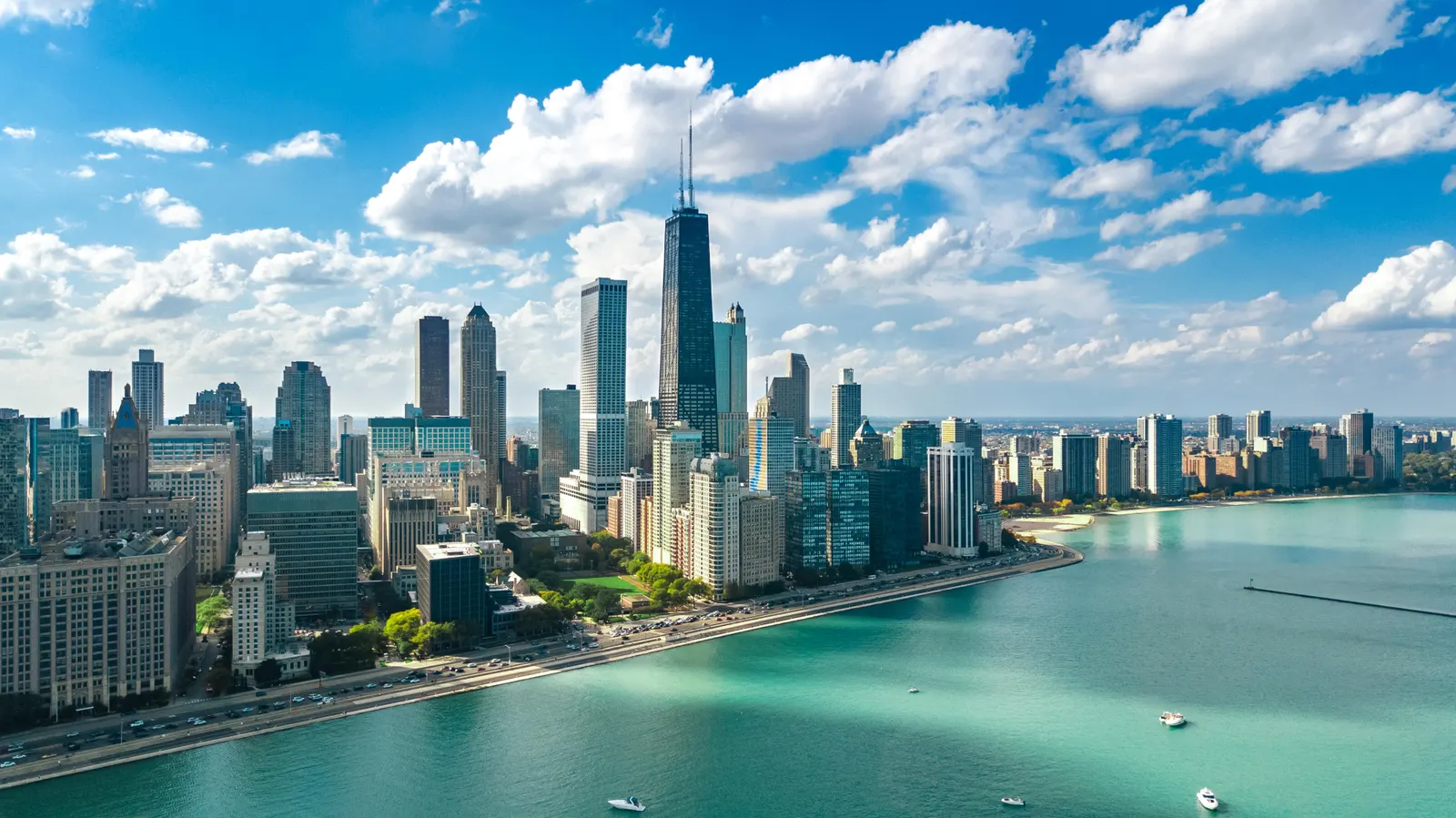
If you're moving to Chicago and trying to make sense of rent, you've probably already seen numbers all over the place. That's because Chicago's nine downtown neighborhoods price very differently from each other — and a single citywide average doesn't tell you much about what you'll actually pay where you want to live.
The honest starting point: downtown Chicago one-bedrooms range from around $2,400/month in Printer's Row to over $3,100 in Streeterville, per Yardi Matrix via RentCafe and Apartments.com. The citywide average is $2,454/month — but that includes far more affordable neighborhoods outside downtown. For most people moving here for work, the realistic budget range is $2,400–$3,100 for a one-bedroom depending on the neighborhood and building.
This guide breaks it all down so you know exactly what to expect before you start touring.
Browse available Chicago apartments on Dibze →
Downtown Chicago Rent at a Glance
| Neighborhood | Studio | 1 Bedroom | 2 Bedroom |
|---|---|---|---|
| River North | $2,355 | $3,057 | $4,542 |
| Streeterville | $2,200+ | $3,100 | $4,400+ |
| Gold Coast | $2,100 | $2,444 | $3,800+ |
| Fulton Market | $2,300 | $2,655 | $4,000+ |
| West Loop | $2,000+ | $2,700–$2,900 | $3,800+ |
| The Loop | $2,207 | $2,723 | $3,782 |
| South Loop | $2,189 | $2,558 | $3,366 |
| Lakeshore East | $2,000+ | $2,500+ | $3,500+ |
| Printer's Row | $2,000+ | $2,400–$2,900 | $3,300+ |
Source: Yardi Matrix via RentCafe, February 2026. West Loop figures reflect newer buildings and exclude Presidential Towers, which starts below $1,900 and is covered in our affordable apartments guide. Printer's Row and South Loop figures from Apartments.com, March 2026.
River North — What You Pay and What You Get
River North is Chicago's most social downtown neighborhood — the densest concentration of restaurants, bars, and nightlife in the city — and the rent reflects that. One-bedrooms average $3,057/month, studios $2,355. It's the highest one-bedroom average downtown, but the range is wide. The Gallery on Wells and Asbury Plaza give you the neighborhood at a more accessible price. Wolf Point East and ONE Chicago are at the top of the market. The people who live here tend to be mid-20s to early 40s — social, active, and willing to pay for the energy around them.
Average Rent in River North — full breakdown →
Browse River North apartments →
Streeterville — What You Pay and What You Get
Streeterville has the highest overall average at $3,345/month — but the number spans a wide range. At the value end, Arrive Streeterville and Lake Shore Plaza start under $2,300, with Cityfront Place and Lofts at River East adding mid-range options with balconies and in-unit laundry. At the top: 500 N Lake Shore Drive, North Water, and Optima Signature anchor the premium end. If you work at Northwestern Memorial Hospital, most of these buildings put you within a 10-minute walk. Oak Street Beach and Navy Pier are both steps away.
Average Rent in Streeterville — full breakdown →
Browse Streeterville apartments →
Gold Coast — What You Pay and What You Get
Gold Coast surprises people. The one-bedroom average of $2,444/month is lower than River North and Streeterville — yet it's Chicago's most prestigious North Side address, with Oak Street Beach around the corner and Rush Street dining at Gibson's Bar & Steakhouse and Maple & Ash outside your door. At the trophy end: The Sinclair, State & Chestnut, and Two West lead the market with pools, EV charging, and in-unit laundry. For value: Chestnut Towers and Elm Street Plaza deliver the address at a more accessible price. The neighborhood is where established professionals — Loop attorneys, senior physicians, finance executives — consistently land.
Average Rent in Gold Coast — full breakdown →
Browse Gold Coast apartments →
West Loop — What You Pay and What You Get
West Loop is where Google's Midwest headquarters and McDonald's global headquarters are, where Randolph Street's restaurant corridor lives, and where a lot of people in their late 20s and early 30s want to be. One-bedrooms at newer buildings run $2,700–$2,900/month. The Row at 164 N Peoria is the top of the market. Arkadia at 765 W Adams is the best mid-market option. The neighborhood runs on energy and access — if you work here, you're walking to the office.
Average Rent in West Loop — full breakdown →
Fulton Market — What You Pay and What You Get
Fulton Market is West Loop's northern sub-district — the Landmark-designated brick warehouse corridor where the Innovation District lives. One-bedrooms average $2,655/month, a step above West Loop proper. If you work at Google or McDonald's, living here means walking to the office. The K Station cluster — Alta at K Station and Echelon at K Station — is the most accessible entry point. Cassidy on Canal is the flagship building at the top of the market.
Average Rent in Fulton Market — full breakdown →
Browse Fulton Market apartments →
The Loop — What You Pay and What You Get
The Loop is Chicago's central business district — and one of the more underrated places to actually live downtown. One-bedrooms average $2,723/month, less than River North, and you get Millennium Park and the Art Institute at your door. The tradeoff is real: the Loop empties after 6pm on weekdays and is quiet on weekends. Trophy options include OneEleven at 111 W Wacker and MILA at 201 N Garland Ct. For value: 73 East Lake delivers a pool, spa, sauna, and movie theatre at well below trophy pricing. If you work here, you're walking to the office.
Average Rent in The Loop — full breakdown →
South Loop — What You Pay and What You Get
South Loop is where your money goes furthest downtown. One-bedrooms average $2,558/month per Apartments.com, with the most supply of any downtown neighborhood keeping pricing competitive. NEMA Chicago and Arrive Michigan Avenue anchor the trophy tier. The Elle and Eleven40 are strong value options. The honest caveat: South Loop is quieter than neighborhoods to the north and going out usually means heading elsewhere in the city — but if that works for how you live, the savings are real.
Average Rent in South Loop — full breakdown →
Browse South Loop apartments →
Printer's Row — What You Pay and What You Get
Printer's Row is a sub-district on the northern edge of South Loop — and one of the better-kept secrets in the downtown market. One-bedrooms average around $2,400–$2,500/month per RentCafe and Rentable, with the overall neighborhood averaging $2,877/month. Burnham Pointe and AMLI 900 are the standout buildings. It's walkable to the Loop and priced below River North for comparable space — most people moving to Chicago don't know it exists until a broker tells them about it.
Average Rent in Printer's Row — full breakdown →
Browse Printer's Row apartments →
Lakeshore East — What You Pay and What You Get
Lakeshore East is tucked between the Loop, Millennium Park, and Lake Michigan — and most people new to Chicago have never heard of it. It's a 28-acre master-planned community with a 5-acre private park at its center and over 5,000 residents. One-bedrooms start around $2,500/month at Shoreham and Tides and Columbus Plaza — Columbus Plaza in particular is worth knowing, with exceptional square footage, strong views, and pricing that long-term residents consistently recommend. Aqua at Lakeshore East and Cascade anchor the trophy tier.
Average Rent in Lakeshore East — full breakdown →
Browse Lakeshore East apartments →
Same Budget, Different Neighborhoods
The most useful thing to understand before you start touring: the same monthly budget gets you very different things depending on where you look. $2,700/month in South Loop buys a newer one-bedroom with a pool and in-unit laundry. The same $2,700 in Streeterville puts you in the value tier a 10-minute walk from Northwestern Memorial. In West Loop it's a solid newer building steps from Randolph Street. None of those is wrong — they just reflect different priorities. The comparison guides below help you think through the tradeoffs head-to-head.
- West Loop vs River North — similar price range, different energy
- Streeterville vs Gold Coast — both near the lake, different lifestyles
- South Loop vs Printer's Row — value tier, which location wins
- Lakeshore East vs South Loop — similar entry points, very different feels
- The Loop vs Printer's Row — close in price, different daily experience
Planning Your Move to Chicago
Now that you know what rent looks like across the city, the next step is understanding what it's actually like to move here — what to bring, what to expect, and how Chicago compares to wherever you're coming from. Most people moving to Chicago are coming from New York, Los Angeles, San Francisco, Austin, Miami, or Seattle, and the cost-of-living difference is significant in every case.
- Moving to Chicago from Out of State — the complete guide
- Relocating to Chicago from New York City
- Relocating to Chicago from Los Angeles
- Relocating to Chicago from San Francisco
- Relocating to Chicago from Austin
- Relocating to Chicago from Miami
Frequently Asked Questions
What is the average rent in downtown Chicago
Downtown Chicago one-bedrooms range from around $2,200 in Printer's Row to $3,100 in Streeterville. The citywide average is $2,454/month per Yardi Matrix via RentCafe — but that covers the whole city. If you're looking specifically at downtown, budget $2,500–$2,900 for a solid one-bedroom depending on the neighborhood and building quality.
Which downtown Chicago neighborhood has the lowest rent
Printer's Row and South Loop are the most accessible downtown neighborhoods. Printer's Row one-bedrooms average $2,400–$2,500/month per RentCafe and Rentable — below River North and Streeterville for comparable space, with the bonus of walking distance to the Loop. South Loop averages $2,558/month with the most building options at the lower end of the downtown market.
Which downtown Chicago neighborhood has the highest rent
Streeterville has the highest overall average at $3,345/month, driven by luxury lake-view buildings near Northwestern Memorial Hospital. River North has the highest one-bedroom average at $3,057. Both have value-tier buildings that bring the accessible end down — they're just not the most visible options when you start searching.
How much has Chicago rent increased
Chicago rent increased 4.64% year over year as of February 2026 per Yardi Matrix via RentCafe, from a citywide average of $2,346 to $2,454. Downtown neighborhoods saw 5–7% increases over the same period. This runs above the national trend, where asking rents across major metros have been softening.
Is Chicago rent expensive compared to other cities
Not compared to the coasts. Chicago is typically 30–50% cheaper than comparable downtown neighborhoods in New York, San Francisco, Los Angeles, and Boston. If you're relocating from any of those cities, your rent budget goes significantly further here — and you'll likely end up in a nicer building than what the same money gets you back home.
Not sure what your budget gets you in each neighborhood? A Dibze broker can walk you through it and set up same-day tours — completely free. Browse available apartments on Dibze.

Zaineb has lived in Lakeshore East for 12 years and brokers across every neighborhood Dibze serves. She's toured the floor plans, knows which buildings are worth the premium, and tracks what's hitting the market in real time — so renters and buyers get the honest read most listings won't give them.