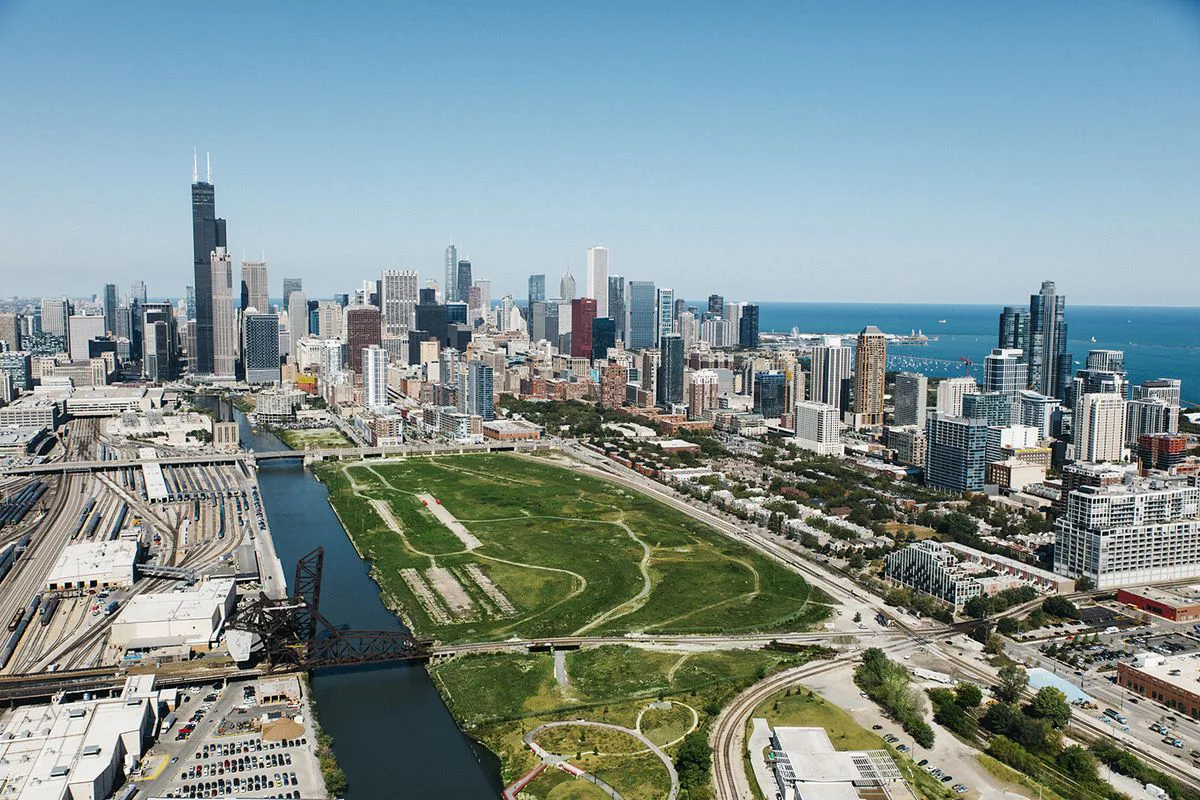
The Loop is Chicago's central business district — built for work, and increasingly viable as a place to actually live. If your office is in the Loop, you can walk to it. Millennium Park is at your door. Rents run below River North for comparable space. The trade is that the Loop empties after 6pm on weekdays and is quiet on weekends — and that's either a feature or a dealbreaker depending on who you are.
This guide covers what daily life in the Loop actually looks like, what it costs, the best buildings, and who it's right for.
See available Loop apartments →
What the Loop Costs
The Loop averages $2,950/month overall, with one-bedrooms averaging $2,723 — running roughly 10–15% below River North for comparable space, per Yardi Matrix data. The range inside the neighborhood is wide: older buildings like Presidential Towers and Millennium on LaSalle price near Printer's Row levels, while new construction near Millennium Park and the river commands a significant premium.
| Unit type | Starting rent | Neighborhood average |
|---|---|---|
| Studio | $1,800/mo | $2,207/mo |
| 1 Bedroom | $2,100/mo | $2,723/mo |
| 2 Bedroom | $3,000/mo | $3,782/mo |
Source: Yardi Matrix via RentCafe, February 2026. Starting rents reflect the most accessible buildings — Presidential Towers anchors the lower end. River-facing and park-facing units at premium buildings start significantly higher.
The West vs East Loop Difference
The Loop is not one uniform experience. The eastern edge along Michigan Avenue and Wabash is tourist-heavy, loud, and feels nothing like a residential neighborhood — it's a destination, not a street. The western blocks toward Wells and Franklin are quieter, more residential in character, and where most apartment buildings are concentrated. A building at Wells and Monroe is a materially different daily experience from a building at Wabash and Madison, even though both are "The Loop."
If you're considering the Loop, start your search on the western side. It's where the neighborhood actually works as a place to live.
Best Buildings in the Loop
OneEleven at 111 W Wacker is the Loop's flagship residential building — 60 stories on the Chicago River with an outdoor pool, fitness center, resident lounge, and direct Riverwalk access from the building's base. River-facing units deliver some of the best water views in the city. MILA at 201 N Garland Ct is the Millennium Park address — if waking up to park and lakefront views is what you want, this is it.
In the mid-range, Marquee at Block 37, Lake & Wells, and 73 East Lake all offer strong amenities — pool, fitness center, rooftop — at prices well below the river-view premium buildings. Parkline Chicago on Wacker is a strong option with city views and solid amenities.
For value: Presidential Towers at 555 W Madison is the most accessible option in the Loop — over 2,000 units, on-site retail including a grocery store, and rents well below what newer buildings charge. It's an older building with finishes to match, but for Loop workers on a budget it's hard to beat. Millennium on LaSalle and 820 Michigan are other accessible options with reasonable amenities.
See the full Loop building breakdown →
After Hours in the Loop
The Loop empties significantly after 6pm on weekdays. The lunch-driven restaurant density that serves tens of thousands of office workers during business hours largely shuts down by evening. Weekends are quieter still — the streets that feel like the center of the world on a Tuesday afternoon are calm on a Saturday morning.
This is the single most important thing to understand about Loop living before you commit. Residents who thrived here consistently say they knew going in that their social life would happen in other neighborhoods — River North, West Loop, Gold Coast — and the Loop was their home base. Residents who struggled say they expected the neighborhood to provide the energy and it didn't. Be honest with yourself about which type you are.
What the Loop does have after hours: the Riverwalk is active seasonally and one of the best evening walks in the city. Millennium Park is a daily amenity — summer concerts, ice skating in winter, the Bean year-round. The Theater District along Randolph and Dearborn brings foot traffic on performance nights. The Dearborn at 145 N Dearborn, Beatnik on the River at 180 N Wacker, and London House at 85 E Wacker are solid evening options on that side of the neighborhood.
Food and Daily Errands
The Loop's dining culture is lunch-driven. The density of restaurants that serves the office population during business hours is impressive — The Gage at 24 S Michigan, The Berghoff at 17 W Adams, Ocean Prime at 87 E Wacker, and Flight Club Chicago at 111 W Wacker are all worth knowing. What shifts in the evening is the volume, not the quality.
Grocery access is the Loop's biggest daily friction point. Target at 1 S State is the primary option for household staples. There are convenience stores throughout, but a proper grocery run typically means walking to South Loop Market at 235 W Van Buren or making the trip to a neighboring neighborhood. This is worth factoring into your decision — it's a real inconvenience compared to most other downtown neighborhoods.
Fitness and Wellness
Equinox at 200 W Monroe is the Loop's anchor gym — well-equipped and centrally located. LA Fitness at 55 E Randolph is the accessible option. First Ascent Block 37 at 108 N State offers climbing and fitness. SoulCycle at 111 W Wacker, CorePower Yoga at 158 W Washington, and Downtown Jiu Jitsu Club at 226 S Wabash round out the boutique options.
Culture and Parks
The Loop has the most concentrated cultural offering of any Chicago neighborhood. The Art Institute of Chicago on Michigan Avenue, the Chicago Symphony Orchestra at Symphony Center at 220 S Michigan, the Lyric Opera at 20 N Wacker, and the Goodman Theatre at 170 N Dearborn are all inside the neighborhood or on its immediate border. The Chicago Cultural Center at 78 E Washington is free and one of the most architecturally stunning buildings in the city.
Millennium Park at 201 E Randolph and Maggie Daley Park at 337 E Randolph are both within walking distance of most Loop buildings — two of the best urban parks in the country, serving as genuine daily amenities for runners, cyclists, and families.
Getting Around
The Loop has the best transit access of any neighborhood in Chicago — every CTA elevated line converges here. Brown, Orange, Green, Pink, Purple, Red, and Blue Lines all serve the Loop circuit within walking distance of most buildings. Both Ogilvie Transportation Center and Union Station Metra hubs are walkable from the western side of the neighborhood.
For Loop office workers, the transit question is largely irrelevant — they walk to work. For getting anywhere else in the city, the Loop's transit convergence means the fastest possible connection to every other neighborhood.
Who Works Here
The Loop is the densest employment concentration in the Midwest. JPMorgan Chase, Bank of America, Northern Trust, and the Chicago Board Options Exchange anchor the finance corridor on LaSalle Street. Nearly every major law firm has a Loop office — Kirkland & Ellis, Sidley Austin, Mayer Brown, Winston & Strawn. McKinsey, BCG, Deloitte, KPMG, Accenture, and PwC all have significant presences. City Hall and the Cook County government seat are here. SOM, HOK, and Perkins & Will design from the Loop.
If your office is in any of these, living in the Loop eliminates your commute entirely. That's the math most residents ran before signing their lease.
Is the Loop Safe
The Loop is safe during business hours — the density of office workers, tourists, and security in major commercial buildings creates a well-monitored daytime environment. The experience changes after 8pm: street activity drops substantially on interior blocks, particularly the financial district around LaSalle and Jackson. The blocks near Millennium Park and the Riverwalk maintain more evening foot traffic. Residential buildings have 24-hour security as standard.
If you're considering a specific building, walk the blocks around it at 9pm on a weeknight before committing. That's the experience you're buying.
The Loop vs Other Neighborhoods
The Loop is right for you if you work downtown and want to walk to the office, if you spend most evenings at home or at the Loop's cultural institutions, and if the value of eliminating a commute is real to you. It is wrong for you if you want neighborhood-scale social life outside your door, if you need a vibrant street scene to feel at home, or if you work outside the Loop and the transit access is no better than what you'd have from River North or West Loop.
Related Guides
- Living in Chicago: All Neighborhood Guides
- Best Apartments in The Loop Chicago
- Average Rent in The Loop Chicago
- The Loop vs Printer's Row Chicago
- Living in Printer's Row Chicago
Frequently Asked Questions
Is the Loop a good neighborhood to live in
Yes — for the right renter. The Loop is the best choice for downtown office workers who want to walk to work, renters who want Millennium Park at their door, and people who are comfortable with a quiet evening neighborhood. It's the wrong choice for renters who want street-level social energy after hours.
How much does it cost to live in the Loop
Studios average $2,207/month, one-bedrooms $2,723, and two-bedrooms $3,782, per Yardi Matrix data — running roughly 10–15% below River North for comparable space. Presidential Towers anchors the lower end at well below the neighborhood average.
Does the Loop get quiet at night
Yes — significantly. After 7–8pm on weekdays and most of the weekend, street activity drops as the office population disperses. The blocks near Millennium Park and the Riverwalk stay more active. Interior Loop blocks are genuinely quiet at night. This is the most important thing to understand before choosing the Loop.
What is the best apartment in the Loop
For river views and premium amenities: OneEleven at 111 W Wacker. For Millennium Park views: MILA at 201 N Garland. For value: Presidential Towers — over 2,000 units at well below the neighborhood average. For the mid-range: Lake & Wells, 73 East Lake, and Marquee at Block 37.
Does the Loop have good transit
The best of any Chicago neighborhood. Every CTA elevated line converges on the Loop, and both Ogilvie and Union Station Metra hubs are walkable. If transit access is the primary filter, the Loop wins without question.
Every Loop building is on Dibze — verified listings, updated daily. See available Loop apartments.

Zaineb has lived in Lakeshore East for 12 years and brokers across every neighborhood Dibze serves. She's toured the floor plans, knows which buildings are worth the premium, and tracks what's hitting the market in real time — so renters and buyers get the honest read most listings won't give them.